
Water Damage Restoration in Cedar Hill, TX
Water through the ceiling, soaked drywall, rooms you cannot use. You need the water out, the wet material dried or removed, and the room put back. We run the whole chain in order and explain each step before it starts.
What to do first
Water in Your Home Right Now
Keep clear of any ceiling that is wet, sagging or bulging, and never touch a wet light, fan or switch. Water spreads through insulation and drywall long after the drip you can see has stopped, so the first hour is about safety and limiting the spread, not cleaning up.
Turn the water off if it is safe
If a pipe, heater or appliance is feeding the leak and you can reach the shutoff safely, close it. Do not cross a wet, sagging ceiling to get there.
Stay out from under a wet ceiling
Wet drywall gets heavy and can come down without warning. Keep people and pets out of the area below any bulge or low spot.
Move what you can, safely
Move furniture and belongings out of the wet room if you can do it without standing under damaged material or near wet fixtures.
Take dated photos
Photograph the stain, the drip and anything damaged, from a safe position. Insurers ask for this record, and it helps the assessment too.
Do not close it up or paint over it
A surface can look dry while the cavity above it stays wet. Sealing or painting too early traps moisture inside the ceiling.
Water coming through the ceiling right now?
That is an emergency, day or night. Our emergency ceiling water damage page covers the first hour in detail, and emergency service runs 24 hours at (972) 961-2680. When the water came through a ceiling, the repair path runs through ceiling leak repair.
Electrical safety guidance: Ready.gov.
The whole job, in order
What Water Damage Restoration Includes
Restoration is not one visit. It is a chain, and each step is checked before the next one starts, so nothing gets closed up while it is still wet. This page is the map. Each step has its own page when you want the detail.
- Emergency response: Active water handled first, at any hour. Emergency ceiling water damage.
- Moisture assessment: Readings across the wet area and past it, insulation and framing checked, written scope. Ceiling leak and moisture assessment.
- Mitigation and extraction: Standing water out, the spread stopped while the job is young. Water damage mitigation.
- Structural drying: Air movers and dehumidifiers, checked with fresh readings. Ceiling drying.
- Insulation replacement: Matted, wet insulation pulled and replaced at the rated value. Ceiling insulation replacement.
- Drywall repair: Ruined board removed, new board fitted and finished. Water damaged ceiling drywall repair.
- Reconstruction and finish: Texture matched, paint feathered out, the room back together. Water damage reconstruction.
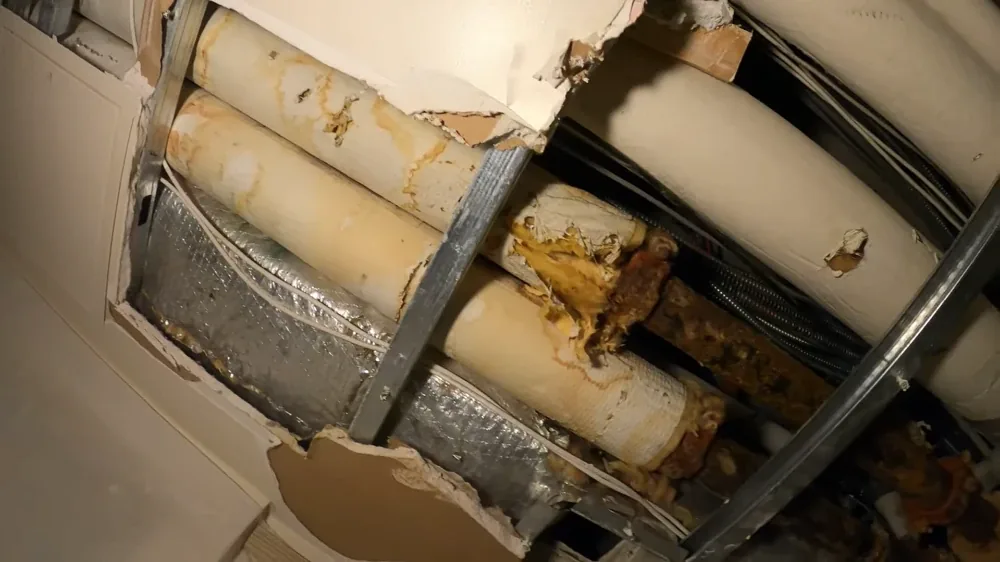
What we do not fix: we restore ceilings and rooms. We do not repair the roof, the pipes or the air conditioner. A roofer fixes roof openings, a plumber fixes lines and fixtures, and an HVAC technician fixes condensate drains and pans. If the source is still live when we arrive, we tell you which trade you need, and the finish work waits until the water has truly stopped.
Assessment first
Assessment Comes Before Any Work
We start with meter readings across the stain and well past it, a look at the insulation and framing, and a written scope before any board comes off. You get the readings, the scope and the price first, and you decide with real numbers in front of you.
- How far did the water actually spread?
- What can dry in place, and what has to come out?
- What will the full job cost, in writing?

What does the restoration work include?
It includes the whole chain: emergency response, a moisture assessment of every wet area, getting standing water out, drying the structure, removing material that cannot be saved, and rebuilding and finishing the room. Each step is checked with readings before the next one starts, so nothing gets closed up while it is still wet.
How long does the restoration work take?
Most homes reach dry readings in about 3 to 5 days of drying, and the full job runs longer when removal and rebuild work follow. No honest timeline exists before the first readings. A room wet for one night and a room wet for a month are different jobs, and the meter, not the calendar, says when drying is done.
Mold and moisture guidance: US EPA, A Brief Guide to Mold, Moisture and Your Home.
How the Restoration Runs, Step by Step
The order matters. Water out on day one is faster and cheaper than drying a room that sat wet all weekend.
Assessment and written scope
Readings first, then a written scope and price before any material comes off. Assessments are paid visits. We do not offer free estimates.
The source is stopped
A leaking pipe, roof opening or AC drain is handled by the trade that owns it. Restoration cannot hold against water that is still coming in.
Water out, spread stopped
Standing water is pulled out, wet items are moved, and the affected area is contained before drying begins. This is the mitigation step, and it limits how much material is lost.
Drying, checked by readings
Air movers and dehumidifiers do the work, and fresh readings check it, never a hand on the wall. Readings are checked against ANSI/IICRC S500, the standard written for professional water damage restoration. The U.S. EPA recommends drying wet materials within 24 to 48 hours to help prevent mold growth.
Ruined material comes out
Drywall that crumbles or stays bowed, and insulation that has matted flat and will not dry in place, is removed and replaced. Sound material stays. The readings and the condition of the material make the call, not guesswork.
Rebuild and finish
New board goes up, joints are taped and coated, texture is matched, and paint is feathered out past the repair. The finished room should not show where the water was.
One call starts the whole chain, from emergency response to the final coat of paint.
Call (972) 961-2680Recent restoration work
Case Study: Bedroom Ceiling and Wall Rebuild After an Attic Water Line Leak

The problem
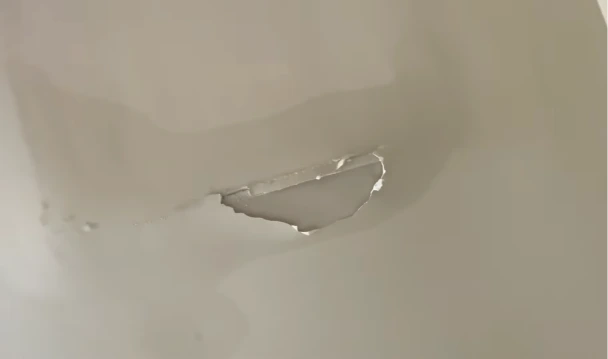
A cracked water line in the attic leaked into a bedroom, damaging the ceiling and wall. The affected areas needed work first, then the interior finishes had to be rebuilt.
The work
The restoration team addressed the affected areas. A rebuild team then installed new insulation and drywall and completed the painting. The homeowner noted attention to small details, including putting items back without being asked and staying late to make progress.
The result
Both teams worked quickly and did more than expected. The damaged bedroom areas received new insulation, drywall and paint as part of the rebuild.
What Customers Say
“A cracked attic water line leaked into a bedroom ceiling and wall. The restoration team took care of the affected areas and was friendly and professional throughout. The rebuild team followed with new insulation, drywall, and paint. Both teams worked quickly and did more than we expected.”
William Foster
“When my ceiling suddenly collapsed, I was worried about finding a dependable repair company. Ceiling Water Damage Experts made the experience much easier. The finished ceiling looked better than it had before, with no visible signs of the damage.”
James Sullivan
“After a pipe burst above my ceiling, Ceiling Water Damage Experts helped protect my hardwood floors and repaired the damaged drywall. I’m grateful for their help getting everything back in order.”
Emily Richardson
Local service
Water Damage Across Cedar Hill
Cedar Hill water damage follows local patterns. Attic air conditioners overflow clogged condensate drains in summer. Attic water heaters drip for weeks before anyone notices. Upstairs bathrooms send water down through failed seals and cracked drain lines. Spring hail opens roofs across the city, and hard freezes, like the February 2021 freeze, burst pipes all over North Texas.
We work across Cedar Hill, from Lake Ridge on Joe Pool Lake and the streets below Cedar Hill State Park to High Pointe, Waterford Oaks, Winding Hollow, Windsor Park, Cedar Crest, Kingswood and Stonewood Heights, along Belt Line Road, FM 1382, US Highway 67 and Pleasant Run Road, around Uptown, Historic Downtown and Dogwood Canyon.
Neighborhood reference: City of Cedar Hill.
Restoration cost
What Affects the Cost?
Price follows how much area is wet, how much material comes out and how much finish work follows. We do not quote from photos. The full breakdown of what moves the number sits on our ceiling water damage repair cost page.
Assessments are paid visits. The paid assessment buys you readings, a written scope and a price before work starts, plus dated photos and moisture readings your adjuster can read.
The Texas Department of Insurance treats a burst pipe, a toilet overflow and a broken washer hose as sudden and accidental damage that policies often cover. A slow leak that ran for months is often denied. Your insurer decides, not us. Texas Department of Insurance guidance.
Questions Homeowners Ask
Does homeowners insurance cover water damage restoration?
Often, when the cause was sudden and accidental. The Texas Department of Insurance lists burst pipes, toilet overflows and broken washer hoses as examples policies often cover, while slow leaks that ran for months are often denied as a maintenance problem. Your insurer makes the decision. What we hand you is dated photos, moisture readings and a written scope your adjuster can read.
Can I stay in my home during the restoration?
In most jobs, yes, though the affected rooms are out of use while drying equipment runs and material is open. Drying equipment is audible, and areas under a damaged ceiling stay closed off for safety. We explain what will be usable and what will not, room by room, when the scope is written, so you can plan around the work.
Do you fix the roof or the pipe that caused it?
No. We restore the ceiling and the room. The source belongs to its own trade: a roofer for roof openings, a plumber for lines and fixtures, an HVAC technician for condensate drains and pans. If the source is still live when we arrive, we tell you plainly which trade you need, and finish work waits until the water has truly stopped.
What if mold is already growing?
Moisture control comes first, because mold needs moisture to grow, and the U.S. EPA recommends drying wet materials within 24 to 48 hours to help prevent mold growth. Where growth is already present and the job needs mold work, that work is licensed in Texas by the Texas Department of Licensing and Regulation, and we will tell you plainly when a job needs a licensed mold provider.
Why do I need an assessment before getting a price?
Because the visible stain is rarely the whole job. Water travels through insulation and along framing, and the wet area may extend beyond the mark you can see. A price given from a photo is a guess that changes mid job. The paid assessment buys meter readings, a written scope and a price you can hold us to before any work starts.
Call About Your Water Damage
Water spreads while you wait, and wet material does not improve on its own. Tell us where the water is, what is above it, and whether it is still coming in.
Call (972) 961-2680
110 E Belt Line Rd, Suite 300
Cedar Hill, TX 75104
Routine hours 7:00 AM to 8:30 PM, Monday through Sunday.
Emergency service runs 24 hours.