
Cedar Hill Homeowner Guide
Frozen Pipe Above the Ceiling in North Texas
North Texas does not freeze often, and that is exactly the problem. Homes in Cedar Hill are built for heat, with water lines running through attics and exterior walls that see the coldest air in the house. When a real freeze arrives, those lines are the first to go. North Texas learned this in February 2021, when a hard freeze split pipes across the whole region and ceilings came down under water nobody saw coming.
The part that catches homeowners out is the timing. The pipe usually splits during the freeze, but the leak often does not start until the thaw. This guide covers which pipes freeze first, what to watch for while it is still cold, and what happens to the ceiling when the ice lets go.
The cause
Why Pipes Above the Ceiling Freeze First
Water freezes from the outside of the pipe in, and a line’s exposure decides how fast. Three things work against attic and exterior wall lines in a North Texas freeze:
- They sit outside the heated part of the house. The living space below stays warm; the attic above the insulation can drop to near the outside temperature, and the pipe lies in that cold air.
- Exterior wall runs get cold from both sides when the wind drives temperatures down for days at a time, not just overnight.
- A hard freeze here lasts long enough to matter. A single cold night rarely splits a pipe. Two or three days below freezing gives the ice time to form, expand and crack the line.
When water freezes it expands, and the pressure that builds between the ice and the nearest closed valve is what splits the pipe wall or pushes a fitting apart. The crack is there, waiting, while the ice plug seals it shut.
When the leak appears
The Split Shows at the Thaw
While the line stays frozen, the ice acts as a plug. The split leaks little or nothing, and the house can look completely fine. Then temperatures rise, the ice melts, full water pressure returns to a pipe that is now open, and the leak starts at the worst possible moment, often when nobody is watching for it.
That is why so many freeze claims begin a day or two after the weather turns: a stain spreading across the ceiling as temperatures rise, a drip at a light fixture, a section of drywall going soft. If your street had frozen pipes during the cold, treat a new ceiling stain in the thaw as an active leak until it is proven otherwise, and shut the water off before you go looking.
What are the signs of a frozen pipe during a freeze?
The clearest sign is no water, or only a trickle, at a tap that worked before the cold set in, especially a tap fed by an attic or exterior wall line. Frost on a visible section of pipe is another. Some homeowners also notice a strange smell from a drain or tap as water sits trapped in the line. Catching it at this stage, while the pipe is frozen but not yet leaking, is what prevention during the freeze is for.
What should you do if you suspect a pipe above the ceiling is frozen?
Shut the water off at the main if you can, and open the affected tap so pressure has somewhere to go as the ice melts. Then call the plumber: thawing and repairing the line is their trade, and a line thawed the wrong way can go from frozen to flooding in minutes. Never use an open flame on a pipe. While you wait, put a bucket under the ceiling below the line and move belongings out of that room, because if the pipe has already split, the thaw will find the crack before anyone does.
Before the next cold snap
Prevention Before the Next Freeze
Most of this is an hour’s work on a mild weekend, and it is aimed at the same attic and exterior wall lines:
- Insulate exposed lines in the attic and garage with foam pipe sleeves, paying attention to elbows and fittings, where splits usually start.
- Know your main shutoff, and make sure it turns. A valve that has not moved in ten years may not move during a burst either.
- During a hard freeze, let faucets fed by exposed lines drip slowly. Moving water resists freezing, and an open tap relieves pressure if ice does form.
- Open the cabinet doors under sinks on exterior walls so warm room air reaches those lines.
- Disconnect garden hoses and shut off exterior faucets before the first freeze of the season.
- Keep the house heated, even when you travel. A thermostat set low to save money is the setup behind a lot of freeze damage in empty houses.
After the line breaks
After a Thaw Burst: The Ceiling Work
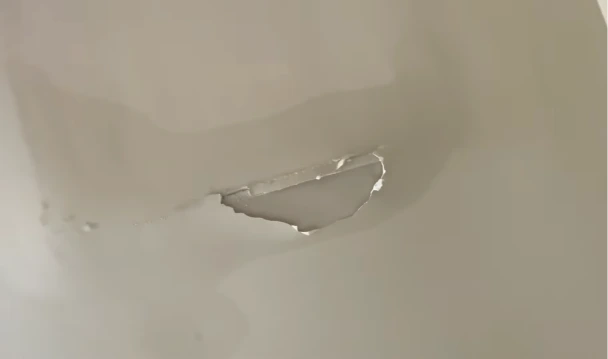
When a frozen line lets go above a ceiling, the response runs in the same order as any attic burst. The water comes off, standing water is extracted, and the wet assembly is opened up where it has to dry. That mitigation sequence is set out on our water damage mitigation page .
Then the materials get tested one by one. We take moisture readings across the ceiling and well past the wet area, and check them against ANSI/IICRC S500. Drywall that is wet but still firm can dry in place with air movers and dehumidifiers, and drying wet materials within 24 to 48 hours is what the U.S. EPA points to to help prevent mold growth. Insulation that is soaked comes out, and drywall that has gone soft or started to sag comes out with it; if it sags, it does not get pushed back up. The drying process, readings and all, is explained on our ceiling drying page.
The assessment is a paid visit, and the fee is confirmed before the visit is booked. The scope and price are written before work starts: what dries, what comes out, what gets rebuilt. And the split line itself is the plumber’s work. The ceiling does not get closed until the line above it is repaired and tested, or the next freeze repeats the whole job.
If water is coming through the ceiling now, at any hour, that is the emergency case, and it should not wait for morning. See emergency ceiling service.
Get the ceiling assessed
Talk to Us About the Ceiling After a Freeze
Tell us which room is affected, whether the water is off, and when you first saw the damage. We will measure the full extent of it and put the scope and price in writing, so you know exactly what the repair involves before any work starts.
110 E Belt Line Rd, Suite 300
Cedar Hill, TX 75104
Routine hours 7:00 AM to 8:30 PM daily.
Emergency service runs 24 hours.