
Cedar Hill Homeowner Guide
Attic Water Heater Leak and the Ceiling Below It
In a lot of North Texas homes, the water heater does not sit in the garage. It sits in the attic, directly above a hallway, a closet or a bedroom ceiling. When it leaks, the first sign is almost never at the heater. It is a stain spreading across the ceiling below, paint starting to bubble, or water dripping through a light fixture.
Attic water heater leaks are the single most common cause in our customer reviews, and they follow a pattern. The water comes out above the ceiling, soaks the insulation first, and only shows itself downstairs after the damage overhead is already wide. This guide walks through the two ways these leaks happen, what the ceiling below is telling you, and where the plumber’s work ends and the ceiling repair begins.
How the setup works
The Attic Setup: Tank, Drain Pan and Drain Line
An attic heater is supposed to leak safely. The tank sits in a drain pan, a shallow metal or plastic tray under the heater, and a drain line runs from that pan to carry small amounts of water outside the house. A slow drip from a valve or fitting lands in the pan, runs down the line, and nobody ever knows.
That system has two weak points. The drain line can clog with sediment or debris, so the pan fills and quietly overflows. And the pan only handles drips. It was never built to hold a tank that lets go.
What does the drain pan under an attic water heater do?
It catches small leaks from the tank and its fittings and sends them outside through the drain line, so a minor drip never reaches your ceiling. It protects you from the slow, small stuff only. A clogged drain line defeats it, and a tank failure overwhelms it in minutes.
Two leak patterns
Two Ways the Ceiling Gets Wet
The slow pan overflow
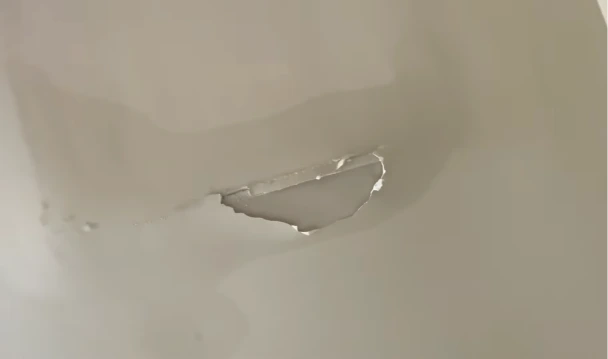
This is the one that hides. The drain line clogs, the pan fills, and water starts spilling over the pan’s edge a little at a time. It wets the attic floor and the insulation around the heater, often for days or weeks, before a mark appears on the ceiling below. By the time the stain shows, the insulation above it is usually soaked through and the drywall has been drinking water from the top side down.
The tank that lets go
A tank at the end of its life can split or fail at a fitting, and then it is not a drip. It is the tank’s full volume of water looking for the lowest point, and the lowest point is the ceiling. This version announces itself fast: dripping, a ceiling that starts to bow under the weight, sometimes a section that gives way. If water is actively coming through, treat it as an emergency and get the water to the heater shut off first. See emergency ceiling guidance.
Why does the ceiling damage look small when the leak is big?
Because you are seeing the last stop on the water’s route, not the whole trip. Water leaving the pan spreads sideways through the insulation before it finds the drywall, and drywall wicks it further still. A stain the size of a dinner plate can sit under insulation that is wet across several joists. The visible mark is a poor measure of the job, which is why a repair scoped from the stain alone so often has to be reopened later.
Signs in the Ceiling Below
- A stain or discoloration over a hallway, closet or bedroom, often right below the attic heater’s position
- Water dripping from a light fixture or a ceiling vent
- Paint that bubbles, peels or feels soft around the stain’s edge
- A musty smell in one room that cleaning does not remove
- A section of ceiling that sags or feels spongy when pressed gently
Is water dripping from a ceiling light fixture dangerous?
Yes. Water and household wiring do not belong together, so treat a dripping fixture as an electrical risk, not just a leak. Turn that circuit off at the breaker, keep hands and standing water away from the fixture, and do not use the light until the ceiling is dry and the fixture has been checked. Stopping the water at the heater comes first; the ceiling assessment comes after the area is safe.
Whose Job Is What
The water heater is the plumber’s trade. Replacing the tank, clearing or rerouting the drain line, and fitting a sound pan are plumbing work, and that work should happen, or at least be firmly scheduled, before the ceiling is closed back up. Closing a repaired ceiling under a heater that still leaks just schedules the same repair twice.
Our side starts where the water landed. We repair the ceiling and its water damage: the wet insulation, the stained or softened drywall, the drying, and the rebuild. One call does not have to cover both trades, but the order matters. Source fixed first, ceiling second.
What the Ceiling Repair Involves
The assessment comes first. It is a paid visit, and the fee is confirmed before the visit is booked. We take moisture readings across the stain and well past it, including above the ceiling where the insulation hides the real spread, and check those readings against ANSI/IICRC S500. Then the scope is written down with the price before any work starts.
From there the job follows the readings:
- Sound, lightly damp material is dried in place with air movers and dehumidifiers, and drying wet materials within 24 to 48 hours is what the U.S. EPA points to to help prevent mold growth.
- Insulation that is soaked through comes out. Wet insulation loses its insulating value, holds moisture against the drywall, and does not dry on any reasonable schedule inside a closed ceiling.
- Drywall that has gone soft, crumbly or sagging is cut out and replaced. If it sags, it comes out; pushing it back up and re-screwing it does not hold.
- The ceiling is rebuilt: new board, tape and compound, texture matched to the surrounding ceiling, then paint feathered past the repair so the patch disappears.
The full sequence, from emergency response to finished ceiling, is set out on our water damage restoration page .
The Insurance Angle, Briefly
A tank that suddenly fails is the kind of sudden and accidental event Texas policies usually cover; a pan overflow that ran for weeks is the kind they read as gradual and often deny. The dates work in your favour when the leak is found, photographed and reported quickly. Our insurance guide explains how Texas insurers read a ceiling claim, what they pay for, and the deadlines state law puts on them.
Get the ceiling assessed
Talk to Us About the Ceiling Below the Heater
Tell us which room is affected, what is above it, and when you first saw the damage. We will measure the full extent of it and put the scope and price in writing, so you know exactly what the ceiling repair involves before any work starts.
110 E Belt Line Rd, Suite 300
Cedar Hill, TX 75104
Routine hours 7:00 AM to 8:30 PM daily.
Emergency service runs 24 hours.