
Cedar Hill Homeowner Guide
Burst Pipe Above the Ceiling: What Happens and What to Do First
A burst pipe does not give you a slow stain to think about. One minute the house is quiet, and the next there is water coming through a light fixture, a seam in the drywall running like a tap, or a ceiling starting to bow under a pool of water you cannot see yet. Most supply lines above Cedar Hill ceilings run through the attic, so when one lets go, the ceiling below takes the full flow at full pressure until somebody shuts the water off.
This guide covers the order that matters: the first minutes, how far one break can wet a house, and then the repair decision, what dries in place and what has to come out.
Immediate steps
The First Minutes: Shutoff, Power, Belongings
Minutes decide how big this job gets. Work through these in order:
- Shut off the water. Close the main shutoff for the house first, not the nearest fixture valve. Every extra minute at full pressure is more water in the ceiling cavity.
- Turn off power to the wet area at the breaker if water is near light fixtures, ceiling fans or outlets, or if the ceiling is sagging. Treat a waterlogged ceiling as an electrical risk until it is dry.
- Stay out from under a bowed ceiling. Drywall holding pooled water can come down without much warning. Move people and pets to another room.
- Move what you can: furniture, rugs and electronics out from under the wet area, or up off a wet floor. Photograph everything as you go, because those dated photos are the start of your insurance record.
- Call for the emergency response once the water and power are handled. See emergency ceiling guidance.
Where is the main water shutoff in most Cedar Hill homes?
In one of two places: the meter box at the street, usually near the curb in the front yard, or a shutoff valve inside the house, commonly on a garage wall or where the main line enters. Find yours on a calm day, not during a burst, and make sure everyone in the house knows it too. Turning that one valve is the single most useful thing you can do in the first minute.
How Far Water Travels From One Break
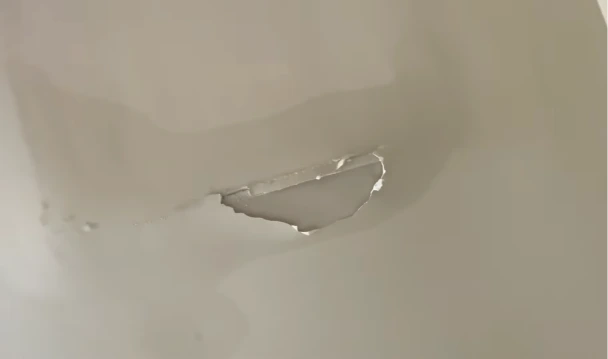
Water from an attic break does not fall straight down and stop. It lands on the top side of the ceiling drywall and runs along the joists, following the low spots. It soaks the insulation, which spreads it sideways well past the break, and it finds every seam, light fitting and vent to drip through. From there it runs down inside wall cavities and can show up in a room that shares no wall with the break itself.
That path is why one burst pipe commonly wets several rooms, and why the drip you can see is the end of the story, not the story. The mitigation work, stopping the spread, extracting standing water and opening up what has to dry, is set out on our water damage mitigation page .
Measured material decisions
What Dries in Place and What Comes Out
Once the water is off and the standing water is out, every material above and below the ceiling gets the same test. We take moisture readings across the wet area and well past it, and check those readings against ANSI/IICRC S500.
If it is sound and damp, it dries
Framing, and drywall that is wet but still firm, can be dried in place with air movers and dehumidifiers. Drying wet materials within 24 to 48 hours is what the U.S. EPA points to to help prevent mold growth, which is why the equipment goes in the same day, not after the weekend.
If it has failed, it comes out
Insulation soaked through, and drywall that has gone soft, crumbly or sagging. If it sags, it comes out. Saturated drywall loses its strength, and insulation that is holding water against the board will keep the whole assembly wet long after the surface feels dry.
If readings say dry, it stays
Nothing sound gets removed to make the job bigger. The decision is physical, taken material by material, and it is written into the scope.
Our assessment is a paid visit, and the fee is confirmed before the visit is booked. You get the readings, the written scope and the price before work starts, so the save-or-cut calls are on paper where you can see them.
A Real Job: Four Room Water Damage Recovery After a Holiday Pipe Burst
Project account
Problem
Two days before Christmas, an attic pipe burst and damaged four rooms. The water affected flooring, drywall, and personal belongings. After several hours of delays with another company, the homeowner’s son contacted Ceiling Water Damage Experts.
Work
A large crew arrived within two hours of the call. The team removed water and damaged materials, installed drying equipment, and continued checking moisture levels throughout the holidays. The rebuild department then handled the repairs. The homeowner described the team as courteous, skilled, and careful around belongings and undamaged areas of the house.
Result
Once the work was complete, the homeowner could hardly tell the damage had occurred. The account highlights the emergency response, continued moisture checks, and care taken during the rebuilding work.
The reported response time applies to this individual project.
The Pipe Itself, and the Insurance Side
The burst pipe is the plumber’s trade. The ceiling, the insulation and the water damage are ours. The repair order matters: the line gets fixed, or isolated so it cannot run again, before the ceiling is closed back up.
A burst pipe is the clearest case in Texas insurance: sudden and accidental, the category policies are built around. Report it quickly, keep the dated photos from the first hour, and keep the damaged material until the adjuster has seen it. Our insurance guide walks through what Texas insurers pay for on a ceiling claim and the deadlines state law sets for them.
Get the ceiling assessed
Talk to Us About the Ceiling After a Burst
Tell us which rooms are wet, where the break was, and when the water was shut off. We will measure the full extent of it and put the scope and price in writing, so you know what dries, what comes out and what gets rebuilt before any work starts.
110 E Belt Line Rd, Suite 300
Cedar Hill, TX 75104
Routine hours 7:00 AM to 8:30 PM daily.
Emergency service runs 24 hours.