
Cedar Hill Homeowner Guide
How to Dry a Water Damaged Ceiling
Some wet ceilings a homeowner can dry with fans, a dehumidifier and patience. Others should not be touched until a professional has looked at them. The difference is not the size of the stain. It is where the water came from, how much material above the ceiling got wet, and whether the board is still sound. This guide gives you the safe homeowner steps first, then the honest limits, then what professional drying actually involves once a job passes those limits.
In Cedar Hill, the water usually arrives from above: an upstairs bathroom, an attic water heater, or the air handler and its condensate line sitting over the ceiling. The stain you see is the last stop on the water’s path, not the whole story. Drywall, insulation and the joists between them all hold water differently, and drying the face of the ceiling is not the same as drying the ceiling.
Call (972) 961-2680Before drying begins
Step One: Stop the Water and Make the Room Safe
- Stop the water at the source. Close the valve at the fixture, or the main shutoff for the house. If the source is a roof opening or a pipe you cannot reach, that repair belongs to its own trade. Our work starts with the ceiling below it.
- Treat electricity with respect. If water is dripping through or near a light fitting, a ceiling fan or an outlet, switch that circuit off at the breaker if you can do so safely, and do not touch the wet fixture. Water and live wiring in the same ceiling cavity are not a combination to experiment with.
- Protect the room. Move furniture out from under the wet area, cover anything that cannot move, and set a bucket under an active drip if you can do so without standing beneath an unstable ceiling. Rugs and soft furnishings the water already reached should come out of the room to dry separately.
- Photograph everything as it is. Dated photos of the stain, the drip and the room are the start of your insurance record, if you file a claim. Read the insurance guide.
Small, clean-water areas
What a Homeowner Can Dry From the Room Side
A small ceiling stain from clean water can often be dried from below: a supply line that dripped and is now fixed, a one-time overflow caught the same day, a small area, and a ceiling that is still flat and firm. Those conditions matter more than the effort. If any of them is missing, skip ahead to the limits section, because the steps below only work inside them.
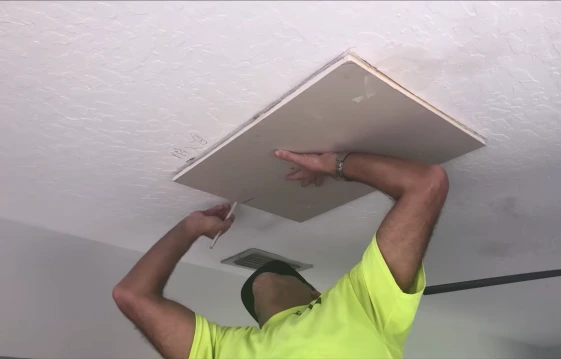
- Get air moving across the ceiling. Aim fans so the air washes over the wet area rather than blasting straight up at one spot. Moving air is what pulls moisture out of the surface of the board.
- Run a dehumidifier in the closed room. Fans alone move damp air around the room. A dehumidifier actually removes water from that air. Drain it or empty it, because a machine sitting on a full tank has stopped drying anything.
- Give it days, not hours, and check every day. Watch the stained area without pressing or opening it if there is any sagging, bulging, active dripping or nearby electrical fixture. Surface appearance alone cannot confirm that the board and insulation above are dry.
- Do not seal it early. Stain-blocking primer and paint go on only after the board is dry and firm all the way through. Sealing a damp ceiling traps the moisture inside it, where it keeps working on the board and the insulation above.
How long does a wet ceiling take to dry?
A small stain with steady airflow and a dehumidifier usually feels dry at the surface within three to five days. That surface feel can mislead you, because the insulation above the board dries far more slowly than the face you can touch. If the area still feels soft after several days, if the musty smell is getting stronger, or if the stain keeps growing, the water above the ceiling is not leaving, and the job has passed what room-side drying can do.
Know when to stop
The Honest Limits: When Not to Dry It Yourself
- A sagging or bulging ceiling. A ceiling that sags or bulges is holding pooled water, and waterlogged drywall gets heavy fast. Stay out from under it. Do not push it back up and re-screw it either; the board has lost its strength, the screws will pop, and the section can come down without much warning. A sagging ceiling is an emergency call, not a drying project. Emergency ceiling service.
- A wet ceiling near live electrical. Never cut, drill or open a ceiling anywhere near light fittings, fans or wiring while the power is on. If water and wiring share the cavity, the power stays off and the ceiling stays closed until someone qualified has assessed it.
- Soaked insulation and large wet areas. The insulation above your ceiling drinks water and holds it against the back of the board. It does not dry from the room side, and it keeps the board wet for weeks while your fans dry the paint. A large area fails the same way: too much hidden material is wet for air in the room to reach.
- Contaminated water. A toilet overflow, a drain backup or anything that came up through plumbing waste can involve contaminated water. It is not a DIY dry. The materials it touched need professional handling and, in many cases, removal.
- A drying job that is losing. A stain that spreads, board that stays soft day after day, or a musty smell that grows stronger while fans run are all signs the moisture above the ceiling is winning.
How do I know if a ceiling is too wet to dry in place?
Watch the ceiling from a safe position. If the stain has grown since yesterday, the ceiling line has started to bow, or the room smells mustier each day despite the fans, moisture may be sitting in the insulation and framing where room air cannot reach it. Do not press a wet or sagging ceiling to test it. Those are reasons for an assessment, not a failure of effort on your part.
Measured drying
What Professional Drying Actually Involves
Professional drying is not a bigger fan. It is measurement first, equipment second, and readings every day until the materials reach a goal. This is the work described on our ceiling drying page.
- Moisture mapping. A moisture meter reads the stained area and well past it, because water travels along joists and through insulation beyond the visible mark. Thermal imaging shows the temperature pattern of the spread. The readings are written down as a map of what is actually wet, including the parts nobody can see.
- Equipment placed by reading. Air movers are aimed to wash air across the wet surfaces, and dehumidifiers are sized to the room and to the amount of water held in the materials. Placement follows the moisture map, not a standard layout that treats every ceiling the same.
- Daily readings against a standard. At each visit the readings are checked against the drying goals in ANSI/IICRC S500. Equipment is moved, added or taken away based on what the numbers say. Drying ends when the materials reach the goal, not when a set number of days has passed.
- Opening the ceiling when the readings say so. If the insulation above the board is soaked, a controlled section of the ceiling is opened so the wet insulation comes out and the cavity can dry. That decision comes from readings that have stopped improving, not from guesswork, and the opening is sized by the map.
The same written record, the readings, the photos and the dates, is what an insurer asks for when a claim is filed, and it is part of the documentation our assessment produces.
Will professional drying save my ceiling, or does the board have to come out?
It depends on what the readings find. Clean water caught quickly, with the board still firm and the insulation dry or only lightly damp, often dries in place. Board that has gone soft or sagged, or that stayed wet for days, usually cannot be saved, and soaked insulation comes out either way. The assessment is what separates the two, which is why we measure before anyone promises an outcome. The assessment is a paid visit, the fee is confirmed before the visit is booked, and the scope and price are put in writing before work starts.
Moisture and mold
A Note on Mold While You Dry
Drying speed is the mold defence. The U.S. EPA recommends drying wet materials within 24 to 48 hours to help prevent mold growth. That is one more reason a slow room-side dry deserves a second look: the longer insulation stays wet above your ceiling, the more the risk of growth grows. Our mold guide explains what growth after a leak looks like, and who handles it when it appears. We do not do mold remediation ourselves; Texas licenses that work separately, and the guide is honest about where our work ends.
Talk to Us About the Ceiling
Tell us which room is affected, what is above it, and how long the ceiling has been wet. We will map the moisture, put the scope and price in writing, and dry the ceiling against readings, not guesses.
Call (972) 961-2680
110 E Belt Line Rd, Suite 300
Cedar Hill, TX 75104
Routine hours 7:00 AM to 8:30 PM daily.
Emergency service runs 24 hours.