
Water Damage Reconstruction in Cedar Hill, TX
The leak is fixed and the ceiling is dry, but there is a hole where your ceiling used to be. We rebuild in order: insulation, new drywall, texture matched to yours, stain sealed, and paint feathered out, so the repair blends in.
Before the rebuild
Is the Room Ready to Be Put Back?
Nothing on this page starts on wet material. Reconstruction is the last stage of a water damage job. The source is fixed first, by the trade that owns it, and the structure has to read dry before any board goes back up.
The source is fixed
A roofer, a plumber or an HVAC technician stops the water at its source. We do not repair roofs, pipes or air conditioners, and a rebuild over a live leak will not hold.
The structure reads dry
Meter readings, not the calendar, say when the room is ready. Board over damp wood traps moisture where you cannot see it.
Ruined material is already out
Wet insulation that matted flat and drywall that lost its strength come out during the earlier stages, not during the rebuild.
Take dated photos
Photograph the open ceiling and the damaged areas before they are covered. That record is what your adjuster will ask for later.
Plan for dust
Drywall dust travels. Floors and furniture get covered before the first cut, and anything you can move out of the room is worth moving.
Still drying, or not sure what stage you are at?
Our water damage restoration page covers the whole job from the first call, and ceiling drying covers the stage that has to finish before any board goes back up. If water is still coming in, call (972) 961-2680 first.
Mold and moisture guidance: US EPA, A Brief Guide to Mold, Moisture and Your Home.
Where the rebuild fits
The Last Stage of the Job, Not the First
By the time a rebuild starts, the hard part is already behind you. The leak is stopped, the wet material has dried or come out, and the room is an open shell waiting for its ceiling back. What happens before this page:
- The source is repaired: Roof, pipe or AC, each by its own trade. Not our work, and not skipped.
- The water is out and the spread stopped: The early work that limits how much of the room is lost.
- The structure is dried and proven dry: Readings are checked against ANSI/IICRC S500, the standard written for professional water damage restoration.
- Wet insulation and ruined board are removed: Matted insulation and crumbling drywall never go back into a ceiling.
- Framing is checked: Joists that water hurt are cleaned up and repaired so new board has a solid base.
Not the same as a plain drywall fix. A plain fix is a dent, a crack or a small hole in a sound ceiling. Reconstruction starts from a room water already tore apart: insulation gone, board cut out, framing checked, and a stain waiting to bleed through new paint. If only the board needs work, our water damaged ceiling drywall repair page is the right read.
Assessment first
The Dry Check Comes Before the Rebuild
The rebuild starts with final moisture readings on the framing and the material around the opening. If anything still reads wet, the rebuild waits. The same visit sets the written scope: how much board, insulation, texture and paint the room needs, and the price, before work starts.
- Do the framing and surrounding material read dry?
- Did the water damage any framing the new board needs?
- What texture and finish must the new ceiling match?

What is water damage reconstruction?
It is the work of putting a water damaged room back together after the source is fixed and the structure reads dry. Wet insulation and ruined board come out during the earlier stages. Reconstruction puts back insulation, new drywall, tape and finish coats, matched texture, primer and paint, so the ceiling looks like the room again.
Will the repair match my ceiling texture?
That is the goal of the texture step, and it is why we match texture before primer goes on. We look at the pattern around the patch, its depth and its spacing, then rebuild that pattern on the new board and check it in angled light. Older or unusual textures can take a test area first, and we tell you what to expect before paint.
Why the dry readings matter: US EPA, A Brief Guide to Mold, Moisture and Your Home.
The Rebuild, Step by Step
The order is fixed, because each step depends on the one before it.
Dry check first
Final moisture readings on the framing and the material around the opening, checked against ANSI/IICRC S500. If anything still reads wet, the rebuild waits. The U.S. EPA recommends drying wet materials within 24 to 48 hours to help prevent mold growth, and closing a ceiling early undoes that work.
Framing fixes
Where water hurt the surface of the ceiling joists, the damaged wood is cleaned up and repaired so the new board has a solid base to screw into. A section that bowed under wet weight is handled as sagging ceiling repair before board goes up.
Insulation back in
Wet insulation that matted flat came out during drying. New insulation goes in at the right depth, so the room holds its temperature the way it did before the water came in.
New board, tape and coats
Drywall is cut to fit, lifted and screwed to the joists. Joint tape, the paper or mesh strip pressed into the first coat over each seam, covers the joints, and coats of compound build the seam flat. Hot mud, a setting compound that hardens in timed minutes, speeds the early coats. Each coat still dries fully before the next. Rushed coats crack.
Texture, prime and paint
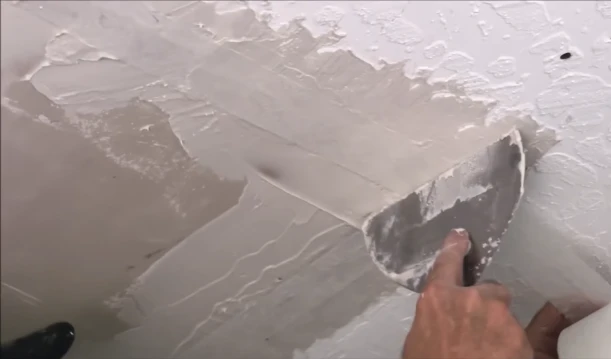
The patch gets the same texture as the rest of your ceiling, including knockdown, the pattern made by flattening sprayed texture with a wide blade. A stain blocking primer seals the repair so old water marks cannot bleed through, and paint goes on past the patch with feathering, spreading the edge thin so it disappears.
Cleanup and the final walk
Floors and furniture were covered before work started, and the room is cleaned as the job goes, not only at the end. Then we walk the room with you and explain what was rebuilt and why, before we call it done.
The ceiling is dry, the source is fixed, and the room is still waiting to be put back?
Call (972) 961-2680Recent rebuild work
Case Study: Blending a Repair With the Ceiling Around It

The problem
Water damage affected a ceiling inside a customer home. The repair needed to address the damaged area while keeping a consistent appearance with the surrounding ceiling, so the patch would not read as a patch.
The work
Ceiling Water Damage Experts repaired the affected ceiling area. The customer described the work as professional and praised the quality of the finished repair.
The result
The repaired section blended with the surrounding ceiling. The customer was satisfied with the appearance and said they would recommend the company.
What Customers Say
“The finished ceiling looked better than it had before, with no visible signs of the damage. They also treated my home with respect and cleaned everything thoroughly afterward.”
James Sullivan
“They handled the work professionally, and the repair blended perfectly with the surrounding ceiling. I would definitely recommend them.”
Christopher Reed
“They efficiently repaired the damage caused by an upstairs toilet overflowing into the downstairs bathroom ceiling. I would happily call them again.”
Patricia Coleman
Local service
Rebuilds Across Cedar Hill
Rebuilds take us from the lake side streets of Lake Ridge near Joe Pool Lake to High Pointe, Waterford Oaks, Winding Hollow, Windsor Park and Cedar Crest, along Belt Line Road and FM 1382, and around Uptown.
Near Historic Downtown, older homes can have plaster ceilings instead of drywall. Plaster gets checked across a wider area, because it can loosen and crack past the stain, and the rebuild plan changes with it.
Neighborhood reference: City of Cedar Hill.
Rebuild cost
What Affects the Cost?
Cost follows the size of the area, how much insulation and board came out, whether the framing needed work, and how much finish the ceiling needs. The factor by factor breakdown sits on our ceiling water damage repair cost page.
Assessments are paid visits. We do not offer free estimates. The fee buys you moisture readings, a written scope and a price for the rebuild before work starts.
Filing a claim? The Texas Department of Insurance points homeowners to documentation, and dated photos, moisture readings and a written scope are the pieces adjusters ask for. Keep the invoice from the roofer, plumber or HVAC technician who fixed the source as well. Texas Department of Insurance guidance.
Questions Homeowners Ask
Can you rebuild before the ceiling is fully dry?
No. The rebuild starts with final moisture readings on the framing and the material around the opening, and if anything still reads wet, the rebuild waits. Board over damp wood traps moisture where you cannot see it, and paint over a damp coat fails the same way. The meter decides when the room is ready, not the calendar and not the schedule.
How long does a ceiling rebuild take?
Most of the clock is drying time, not work time. Each coat of compound has to dry before it can be sanded and coated again, and texture and primer have drying time of their own. A single small section may take only a few visits. A whole ceiling with insulation and framing work takes longer. We lay out the order of visits at the assessment.
Will drywall dust get all over my home?
Drywall dust travels, and we plan for it. Floors and furniture are covered before the first cut, tools and waste stay in the work area, and the room is cleaned as the job goes, not only at the end. One homeowner, Rachel Morgan, had a ceiling leak repaired and wrote that there is no visible sign of it now, and that the crew kept the area clean through the whole job.
Why does texture matter more than paint colour?
Paint colour is easy to match. Texture is not. A smooth patch in the middle of a knockdown ceiling catches the light from the windows and reads as a pale rectangle, even when the paint is the exact same colour. The eye spots a change in surface long before it spots a change in shade, so texture gets its own step and a check in angled light before any paint goes on.
What paperwork do I get for my insurance claim?
Keep the paper from every stage. The Texas Department of Insurance points homeowners to documentation when they file a water damage claim, and dated photos, moisture readings and a written scope are the pieces adjusters ask for. Keep the invoice from the trade who fixed the source as well. Whether a claim is paid is your insurer’s call under your policy. What we hand you is a record that is easy to follow.
Call About Your Ceiling Rebuild
The ceiling is dry, the source is fixed, and the room is still waiting to be put back. Tell us what the water did and what stage the room is at, and we will tell you plainly what the rebuild will take.
Call (972) 961-2680
110 E Belt Line Rd, Suite 300
Cedar Hill, TX 75104
Routine hours 7:00 AM to 8:30 PM, Monday through Sunday.
Emergency service runs 24 hours.