
Water Damage Mitigation in Cedar Hill, TX
Water is still spreading, and every hour soaks more drywall, flooring, and belongings. Mitigation is the first work that limits the damage: water out, spread stopped, drying started. We move fast and document everything for your records.
What to do first
Water Still Spreading Right Now
If water is still coming in, keep everyone clear of wet lights, fans and switches. Standing water keeps soaking into drywall, flooring and the ceiling below for as long as it sits, so the first minutes are about safety and stopping the flow, not mopping up.
Turn the water off if it is safe
If you can reach the water shutoff safely, turn it off. Do not cross a wet floor near outlets or stand under a wet ceiling to get there.
Keep clear of wet fixtures
Never touch a wet light, fan or switch, and keep clear of outlets in a wet wall. Water and household wiring are a dangerous mix.
Stay out from under a wet ceiling
If the ceiling below the water is stained, soft or sagging, keep people and pets out of that room. Wet drywall gets heavy and can come down.
Move what you can, and take photos
Move furniture and belongings out of the wet area if you can do it safely, and take dated photos as you go. That record matters later.
Leave wet material in place for now
Do not tear out wet drywall or padding before it is measured. The readings and photos from the first visit are the record your insurer and the repair plan both rely on.
Water coming in right now, at any hour?
That is an emergency. Our emergency ceiling water damage page covers what an emergency visit looks like, start to finish, and emergency service runs 24 hours at (972) 961-2680. A pipe that bursts at two in the morning does not wait for office hours, and neither does the water it lets loose.
Electrical safety guidance: Ready.gov.
Why Cedar Hill homes flood
The Water Problems Behind Most Calls Here
Mitigation calls in Cedar Hill usually start with one of a few local patterns. Knowing which one you have tells us where the water is likely hiding, in the attic insulation, the wall cavity or the ceiling below.
- Burst pipes in a freeze: The February 2021 freeze split pipes all across North Texas. Lines in attics and outside walls are the first to go when the temperature drops hard.
- Attic water heaters: A tank or a line above the ceiling leaks down into the rooms below, sometimes for days before a stain shows.
- Washing machine hoses: A failed hose can pour water for hours before anyone is home to hear it running.
- Toilet overflows: Water from an upstairs bathroom finds the ceiling of the room below fast.
- Storm water: Spring hail and heavy rain open up roofs, and water gets in at vents and flashing and runs down to the ceiling.
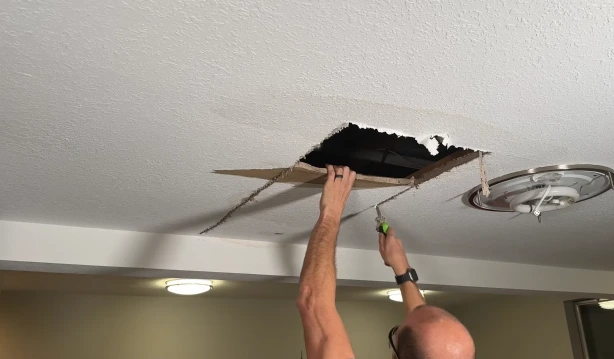
What mitigation does not cover: we do not fix the source. A roofer repairs the roof opening. A plumber repairs the pipe, the hose or the fixture. An HVAC technician repairs the condensate drain or pan. We tell you which trade you need, and we hold the damage where it is while you line that trade up. Mitigation is not the rebuild either. New drywall, texture and paint come after the readings say the material is dry.
Measured from the first visit
Checked, Measured and Written Down
On the first visit we take moisture readings across floors, baseboards, walls and the ceiling below, the same check that runs our ceiling leak and moisture assessment. The wet area is almost always wider than the puddle you can see, and everything is written down from the start instead of guessed at later.
- How far has the water actually spread?
- What can still be saved, and what is soaked through?
- What happens next, and in what order?
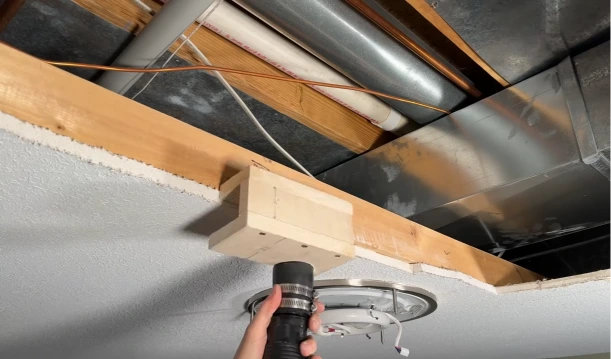
What does mitigation cover?
Mitigation is the first work done after water gets loose in a home. The goal is simple: stop the spread, remove standing water fast, protect belongings, and start drying before more material soaks through. It is not the repair and not the rebuild. It is the step that keeps a bad day from turning into a gutted room.
How quickly should water be extracted?
As fast as you can get it out, and the same day whenever possible. Standing water keeps soaking into drywall, flooring and the ceiling below for as long as it sits. The U.S. EPA recommends drying wet materials within 24 to 48 hours to help prevent mold growth. Every hour of standing water makes that window harder to hit.
Mold and moisture guidance: US EPA, A Brief Guide to Mold, Moisture and Your Home.
What Mitigation Work Includes, Step by Step
On a mitigation visit we work through the same steps, in this order.
Shut the water off
We help you find the shutoff, on the phone or on site, and get the flow stopped. Fixing the pipe, the roof or the drain itself is another trade’s job, and we tell you which one you need.
Extract standing water
Pumps and extraction tools pull standing water off floors and out of carpet and padding. The faster the water comes out, the less the drywall, flooring and ceiling below get to drink in.
Check what is wet
Moisture readings across floors, baseboards, walls and the ceiling below map the real wet area, so drying and any later removal are based on measurements, not the size of the puddle.
Move and protect belongings
Furniture and belongings come out of the wet area. What has to stay gets covered and protected while the work runs.
Start the drying
Air movers and dehumidifiers go in on the same visit, set up the way our ceiling drying work runs. Drying readings are checked against ANSI/IICRC S500, the standard written for professional water damage restoration.
Write it down
Dated photos and moisture readings from the first visit, kept as a record. The Texas Department of Insurance makes the point that dated photos help support a claim, and an adjuster can read a clear record faster than a memory.
Everything after this step goes better because of it. Drying is faster, and less material has to come out.
Call (972) 961-2680Recent mitigation work
Case Study: Four Rooms Recovered After a Holiday Pipe Burst
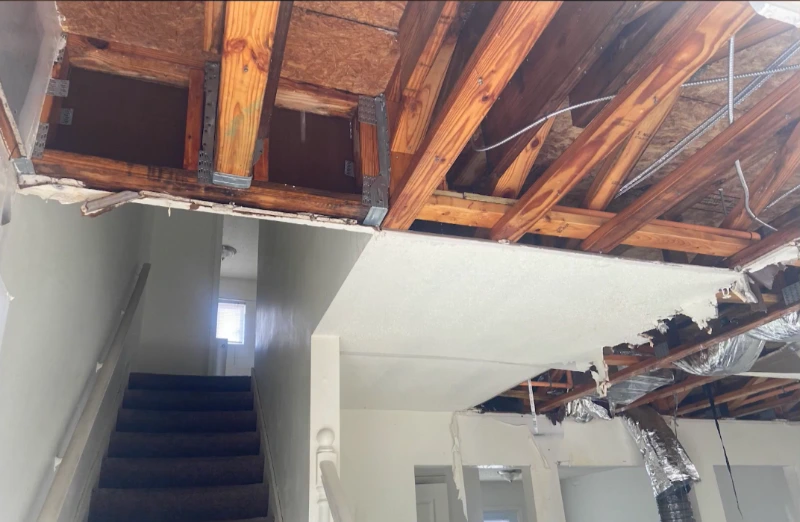
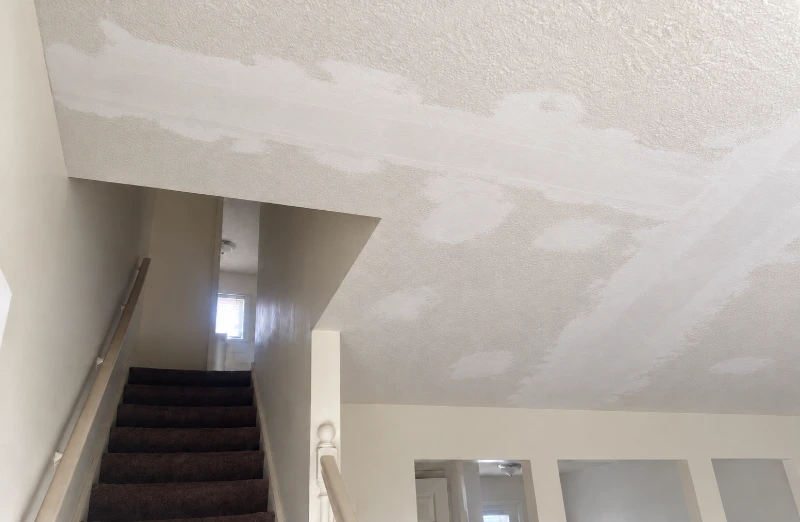
The problem
Two days before Christmas, an attic pipe burst and damaged four rooms. The water affected flooring, drywall and personal belongings. After several hours of delays with another company, the homeowner’s son contacted Ceiling Water Damage Experts.
The work
On this job, a large crew arrived within two hours of the call. The team removed water and damaged materials, installed drying equipment, and continued checking moisture levels throughout the holidays. The rebuild department then handled the repairs, and the homeowner described the team as courteous, skilled and careful around belongings and undamaged areas of the house.
The result
Once the work was complete, the homeowner could hardly tell the damage had occurred. The job shows the emergency response, the continued moisture checks and the care taken during the rebuilding work.
What Customers Say
“Two days before Christmas, an attic pipe burst and caused major damage to four rooms. After hours of delays with another company, my son contacted Ceiling Water Damage Experts, and a large crew was at our home within two hours.”
Richard Thompson
“An ice storm caused a sudden roof leak that reached my mom’s closet. A coworker recommended them, and they arrived that same day to begin the cleanup.”
Michael Carter
“After a pipe burst above my ceiling, they helped protect my hardwood floors and repaired the damaged drywall. I am grateful for their help getting everything back in order.”
Emily Richardson
Local service
Serving Homes Across Cedar Hill
We work across Cedar Hill, from Lake Ridge near Joe Pool Lake and the streets by Cedar Hill State Park to High Pointe, Waterford Oaks, Winding Hollow, Windsor Park, Cedar Crest and Kingswood, along Belt Line Road, FM 1382 and Pleasant Run Road, and around Uptown and Historic Downtown.
When you call, tell us where the water is and where it came from, if you know. A burst line in the attic, a washer hose and an upstairs toilet each send water to different places, and that first detail shapes what the crew brings.
Neighborhood reference: City of Cedar Hill.
The first visit
What the Assessment Fee Buys
For how repair pricing is built after mitigation, see our ceiling water damage repair cost page. The first visit itself buys the record everything else stands on.
Assessments are paid visits, and we do not offer free estimates. What the fee buys is readings, photos and a written record from the first visit, so the drying, the repair plan and any insurance claim all start from measurements instead of guesses.
The Texas Department of Insurance notes that dated photos help support a claim after water damage. Texas Department of Insurance guidance.
Questions Homeowners Ask
Is mitigation the same as restoration?
No. Mitigation is the first step inside the bigger job. Water damage restoration is the whole chain, from emergency response and assessment through drying, removal and the rebuild. Mitigation is the part that limits the damage while the job is young: water out, belongings protected, drying started and everything measured.
Do you fix the pipe, roof or drain that leaked?
No. We stop the damage spreading and dry the home. The source belongs to its own trade: a plumber for pipes, hoses and fixtures, a roofer for roof openings, and an HVAC technician for condensate drains and pans. We tell you plainly which trade you need, and we hold the damage where it is while you line that trade up.
What happens after mitigation?
The job moves in order. Drying continues until the readings say the material is dry. A damaged ceiling then gets repaired through our ceiling leak repair work. Bigger losses move into water damage restoration, and rooms that need putting back together go to water damage reconstruction. Nothing gets closed up while a reading still says wet.
Will my furniture and belongings be moved?
Yes, that is part of the visit. Furniture and belongings come out of the wet area before extraction and drying gear go in. Anything that has to stay in the room gets covered and protected while the work runs. The homeowner in the case study above noted the crew was careful around belongings and the undamaged areas of the house.
Why take photos and readings on the very first visit?
Because memory fades and a wet area does not explain itself a week later. Dated photos and moisture readings from the first visit show where the water was and how far it spread, which guides the drying and any removal. The Texas Department of Insurance also makes the point that dated photos help support a claim, and an adjuster can read a clear record faster than a memory.
Call Before the Water Spreads Further
Standing water does not sit still, and neither should the call. Tell us where the water is and where it came from, if you know.
Call (972) 961-2680
110 E Belt Line Rd, Suite 300
Cedar Hill, TX 75104
Routine hours 7:00 AM to 8:30 PM, Monday through Sunday.
Emergency service runs 24 hours.