
Ceiling Water Damage Experts · Cedar Hill, TX
Sagging Ceiling Repair in Cedar Hill, TX
A section of your ceiling is hanging lower than it used to. It may have a stain, a rounded bulge or a crack along the edge. Keep people and pets out from beneath it. Do not push on the spot or make a hole to drain it.
We check the affected area and explain what material needs to be removed, dried or rebuilt. Tell us whether the ceiling is changing, dripping or wet near a light.
Call (972) 961-2680What to do first
Is It Safe to Stay in the Room?
If the sag is new, growing or linked to a leak, leave the area beneath it clear. You cannot tell from the floor how much water or weakened material is above the surface. Avoid ceiling lights and fans if they are wet.
A new or growing bulge
Keep people out from beneath it and call.
Water dripping from the low spot
Stay clear. Stop an accessible water source only if it is safe to do so.
A crack spreading around the sag
Keep the area clear and do not press on the board.
Water near a light or fan
Do not touch or use the fixture. Seek qualified electrical help.
A section has fallen
Stay out of the affected area and keep pets away from debris.
Should I poke a hole in the bulge to let water out?
No. That puts you directly beneath material that may give way, and water can come out suddenly. Keep the area clear. If a pipe is leaking, shut off an accessible valve only if you can do so safely. Tell us whether water is still entering when you call.
Electrical safety guidance: Ready.gov.
Understanding the cause
What Can Make a Ceiling Sag?
Water is one possible cause, but not every bowed ceiling has a leak. The shape may also relate to how the board is attached or to another building issue. A stain, drip or sudden change after water entered the home makes moisture a key concern.
- Upstairs bathroom or pipe leak: Plumbing and the ceiling below may need checking.
- Rain through the roof: The roof source and affected ceiling material may need attention.
- Attic water heater leak: The tank or line and rooms below may be affected.
- Wet spot after the AC runs: Condensate equipment may be involved.
- No known water event: Board attachment or another cause may need investigation.
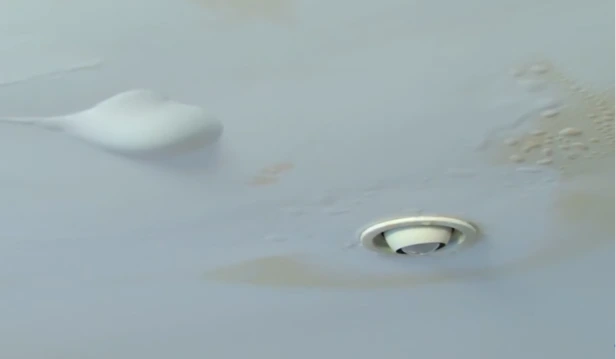
A plumber, roofer or HVAC technician may need to repair the system that leaked. If the concern appears to involve framing or another structural part of the home, an appropriate qualified professional should assess it. A ceiling can remain bowed even after it dries; drying alone does not necessarily restore the board’s shape or strength.
Repair assessment
How We Decide What Needs Repair
We look at the visible shape, cracks and nearby seams. We ask when the sag appeared, whether it has changed and whether water entered from above. Moisture checks help guide the work on affected material.
- Is the water source still active?
- Can any affected material remain and dry?
- How much weak material needs removal before rebuilding?
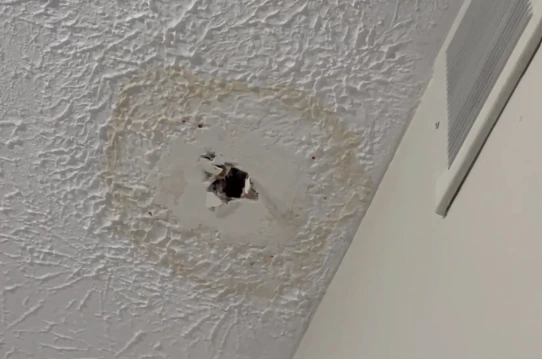
Can the sagging part be repaired without replacing the whole ceiling?
Often, work can be limited to the affected section. That depends on the condition of the surrounding material and where the weak area ends. We explain the proposed repair area after checking it.
What if the board has already dried?
A dried board may still be bowed, swollen or weak. Its condition should be checked before anyone covers the area with texture or paint.
Drywall drying guidance: US EPA.
What Happens During the Repair?
The exact work depends on the source, moisture and strength of the affected ceiling.
The source is addressed
If a pipe, roof or AC system caused the problem, that source needs to be controlled before the finished ceiling is at risk again.
Weak material is removed
A bowed section that cannot remain may need removal. The extent depends on the material’s condition, not only the visible bulge.
Material that can stay is dried
Nearby material may also be wet. Moisture checks help guide when the ceiling is ready to be closed and finished.
The ceiling is rebuilt and finished
New board is installed where needed. Joints, texture and paint complete the surface. Existing texture and paint age affect the match.
A ceiling that is getting lower needs attention. Tell us what changed.
Call (972) 961-2680Ceiling collapse
When a Section of Ceiling Has Already Fallen
Sometimes the sag does not stop at a bulge. A section of board, soaked through and too heavy for its fasteners, comes down. What is left is a hole, hanging edges that are still weak, and debris on the floor. Stay out of the area below the opening. More material can follow, and wet insulation and broken board should not be handled without care.
A fallen section also tells a story. The board did not fail on its own. Water weakened it first, and the material around the opening has usually been wet as well. Repairing a collapse means checking that wider area, not just covering the hole.
Make the area safe first
Keep people and pets away from the debris and the opening above it. Do not touch a light or fan that came down or got wet. If water is still coming in, shut off an accessible valve only if you can reach it safely. Photos for your insurer can be taken from the doorway, not from under the hole.
What we check before any rebuild
Whether the source has stopped, how far the moisture spread past the opening, and the condition of the board and insulation still in place. If framing looks damaged, it should be assessed by an appropriate qualified professional before the ceiling is closed. In an older home, ceiling material can contain asbestos, and the EPA advises testing suspected material before it is disturbed.
How a collapsed section is repaired
Hanging and weakened material is removed back to board that is firm. Wet material that can stay is dried and checked with moisture readings. New board is then installed, and the joints, texture and paint are finished to match the ceiling around it. The collapse repair below shows one of these jobs, start to finish.
Dealing with a ceiling that has come down, or one that looks close to it?
Call (972) 961-2680Recent ceiling work
Case Study: Ceiling Repair After a Sudden Collapse
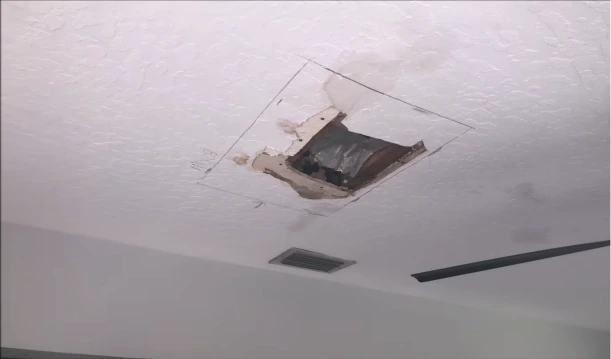
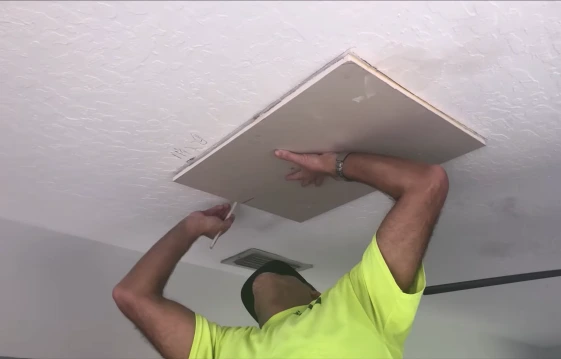
The problem
A homeowner experienced a sudden ceiling collapse and needed the damaged area repaired. They were concerned about repair quality and how the work would affect their home.
The work
Ceiling Water Damage Experts repaired the damaged ceiling. According to the homeowner, the team worked professionally, respected the property and cleaned the work area afterward.
The result
The homeowner reported that the finished ceiling looked better than before, with no visible signs of the original damage. They highlighted the workmanship, attention to detail and care during the repair.
What Customers Say
“A team member from Ceiling Water Damage Experts arrived ahead of schedule to assess the water damage after part of our ceiling fell beneath an upstairs bedroom. They were professional, answered every question, and suggested ways to reduce costs. The price was reasonable, and we appreciated their help.”
Susan Mitchell
“After a pipe burst above my ceiling, Ceiling Water Damage Experts helped protect my hardwood floors and repaired the damaged drywall. I’m grateful for their help getting everything back in order.”
Emily Richardson
“The team at Ceiling Water Damage Experts did an excellent job addressing the water damage in my ceiling. They were pleasant to work with, handled my belongings carefully, and cleaned up thoroughly afterward. Even my carpet looked better when they finished.”
Amanda Lewis
Local service
Ceiling Help Across Cedar Hill
We discuss bowed and damaged ceilings with homeowners in High Pointe, Stonewood Heights, Waterford Oaks, Kingswood and Lake Ridge.
When you call, tell us which room is affected and what is above it. An upstairs bathroom, attic water line and roof point to different systems that may need checking.
Repair scope
What Affects the Cost?
A limited damaged section and a ceiling that has partly collapsed require different work. Pricing depends on the condition found during the assessment.
Assessments are paid visits. Call to confirm the current fee, what the visit includes and whether any part is credited toward approved work.
If you may contact your insurer, take photos from a safe location and keep receipts for necessary protective work. Texas Department of Insurance guidance.
Questions Homeowners Ask
Is a small sag something I can ignore?
Have a new or changing sag checked. Its size from the floor does not tell you what is happening above the board. If it followed a leak, is growing or has a nearby crack, keep the area beneath it clear.
Will the ceiling fall if it has a water bulge?
It may, but no one can predict from a photo when or whether that section will give way. Treat the space beneath it as unsafe. Keep people away, do not puncture it and report any active drip or wet fixture when you call.
Can you just screw the board back up?
The material and possible water source need checking first. A weak section may need replacement, while another cause of sagging may require a different professional. Fastening damaged board back into place can hide the problem.
How long does the repair take?
The schedule depends on whether the leak has stopped, what must be removed and what needs drying. Rebuilding the board, finishing joints, matching texture and painting take separate steps. Ask for the proposed sequence after the area is checked.
What if there is no water stain?
A ceiling can bow without a visible stain, and water is not the only possible cause. Note when you first saw the change and whether it is growing. Keep clear of a weak area and arrange an assessment.
Call About the Sagging Ceiling
Tell us when you first noticed the low spot, whether it is changing and if water is dripping or near a light fixture.
Call (972) 961-2680
110 E Belt Line Rd, Suite 300
Cedar Hill, TX 75104